
How Each Garden Plot is Unique: Soil
What's your soil type?

Do you know what’s in your soil?
In a perfect world, native soil dictates plant selection. For urban and suburban soils, it is unlikely your native soil still exists. Before building houses, contractors typically scrape and haul away topsoil. What’s left is the subsoil, primarily composed of small soil particles, such as sand, silt, and clay, with relatively little organic matter and humus, the dark, organic material in soil that forms when plant and animal matter decomposes. While challenging to work with, amending the subsoil with organic matter will allow your plants to thrive!
1998
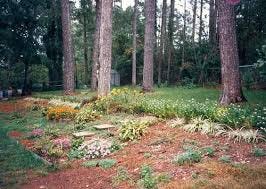
Photo Credit: Helen Yoest. What would become the Mixed Border
There wasn’t much of a garden when we bought our house in 1998. A year earlier, hurricane Fran took out 30+ pine trees, turning a shady pine forest into full sun. Since the house was on the market then, the current homeowners passed the new sun requirements off to whoever bought the house. That was me. As you can see, Fran didn’t take them all.
Of course, I wanted to garden this plot of land immediately. The existing soil where I carved out planting beds was pure red Carolina clay! I intended to till the soil in what is now the Mixed Border (above), but with working full-time and a one-year-old daughter underfoot, time escaped me. I even had a friend lend me his Matrix tiller.
That was then. I later learned tilling destroys soil structure and is no longer recommended for home gardening. Instead, each planting hole was amended with a mix of compost to the existing soil, one planting hole at a time.
I don’t often get to do everything I want to do because of my busy schedule. In this case, being busy was helpful in the long run, as it prevented the destruction of the existing soil. Yes, red clay is soil! I now have the best soil in six states!
After the first round of pollinator plants was in, I added three to four inches of composted leaf mulch from the City of Raleigh. That year and annually afterward for the next ten years, I top-dressed the beds with the City’s mulch.
Mulch adds nutrients, retains moisture, prevents soil from heaving in winter, and keeps the garden tidy. I like that. As wild as my garden is for wildlife, it is also organized to be pleasing.
Each year after the first 10, I needed less and less composted leaf mulch since the plantings grew and took up space, and of course, I added more pollinator plants. After this time, I switched to fresh leaf mulch—a gift from Nature. You could also add rotted manure, worm castings, grass clippings (spread evenly around), and herbaceous plant material, as I do for composting in place. (More on composting later in the Book.)
What is topsoil?
Five essential functions of topsoil
Topsoil serves five essential functions by regulating moisture, sustaining plant and animal life, filtering and buffering potential pollutants, cycling nutrients, and providing physical stability and support.
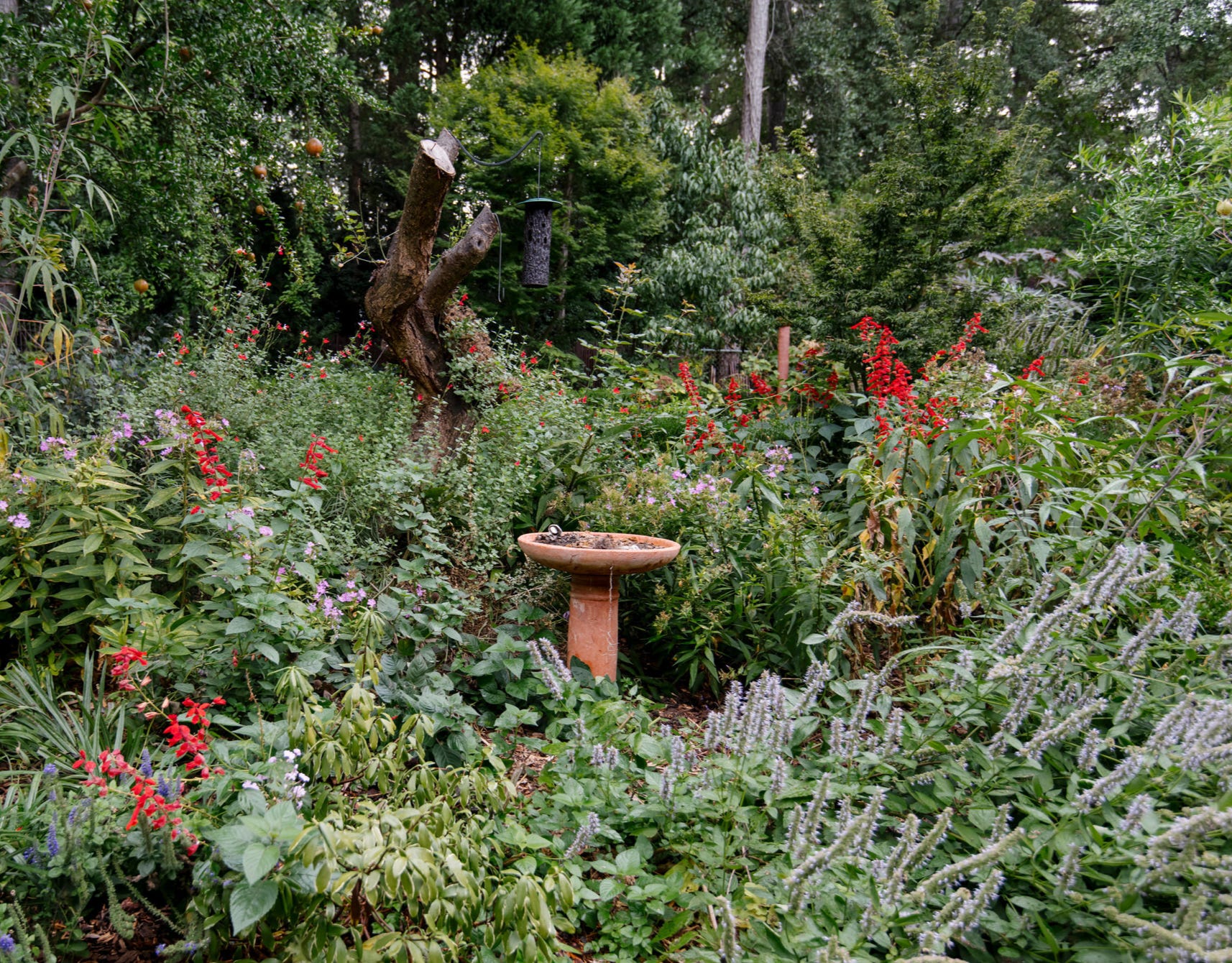
Photo Credit: Liz Condo. The Mixed Border today.
I have several paid subscribers, and this book is for them. Read on; if my content interests you, upgrade to learn more! Helen Yoest
